

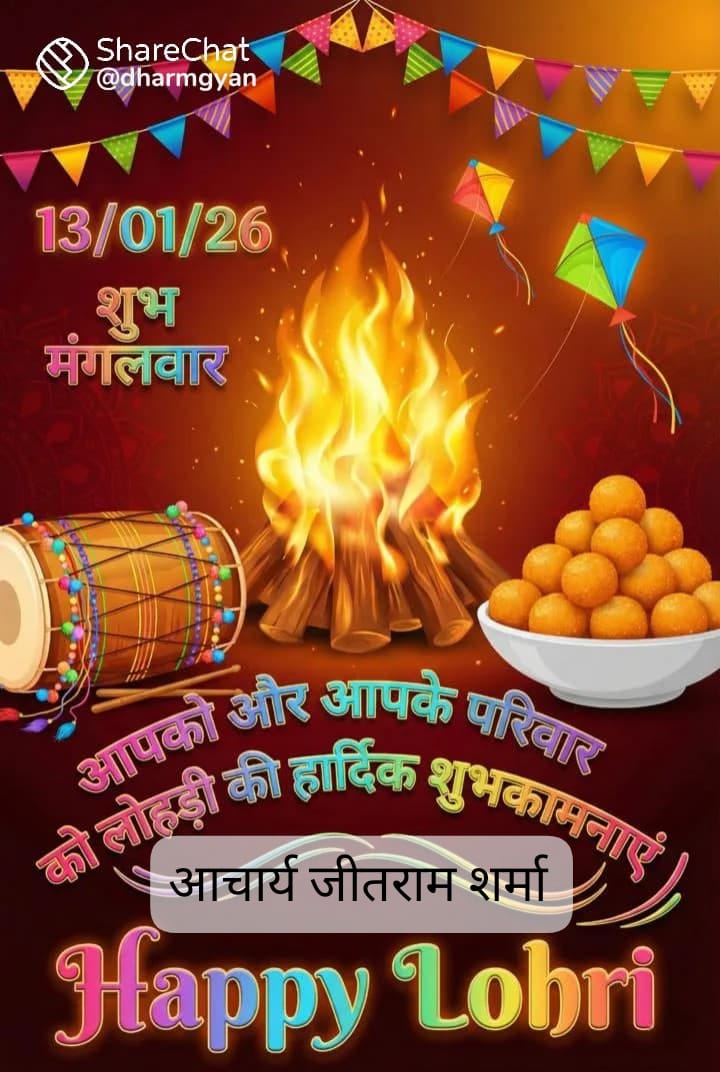
Sidhivinayak taimes Shimla। Lohri, the traditional winter festival of North India, is celebrated with distinctive warmth and cultural richness in various parts of Himachal Pradesh. Observed annually on January 13, the festival marks the transition from the coldest days of winter to the promise of longer and brighter days ahead. Deeply connected to agrarian life, Lohri signifies gratitude towards nature for agricultural abundance and symbolises hope, renewal and prosperity with the sun’s movement towards Uttarayan. In the lower hill districts of Himachal Pradesh, including Kangra, Una, Hamirpur, Bilaspur and parts of Solan, Lohri holds special social and cultural significance. Families with newly married couples or newborn children celebrate the festival with particular enthusiasm, organising community gatherings and sharing festive offerings with neighbours and relatives. As night falls, people assemble around bonfires in village courtyards and open spaces, offering sesame seeds, jaggery, rewri, peanuts and popcorn into the sacred fire while seeking blessings for well-being and harmony.

Read This:https://sidhivinayaktimes.com/collapsed-sensitivity-missing-jai-ram-thakur-slams-govt/
Traditional folk songs sung in local dialects form an integral part of Lohri celebrations in Himachal. Children and youth move from house to house singing customary Lohri songs, keeping alive centuries-old oral traditions. The celebrations often include simple folk dances around the bonfire, fostering unity and reinforcing the strong community bonds that define rural life in the hill state. Amid snow-covered hills and frosty evenings, Lohri brings warmth through shared joy and collective participation. Beyond its ritualistic importance, the festival serves as a reminder of cultural continuity and social togetherness in a rapidly changing world. In Himachal Pradesh, Lohri remains a vibrant expression of faith, tradition and the enduring spirit of community life.








 Loading ...