

CHANDIGARH | March 22, 2026– Experts and policymakers have called for a “triple helix” model—integrating academia, government, and technology—to combat the rising Air Quality Index (AQI) crisis in the city.
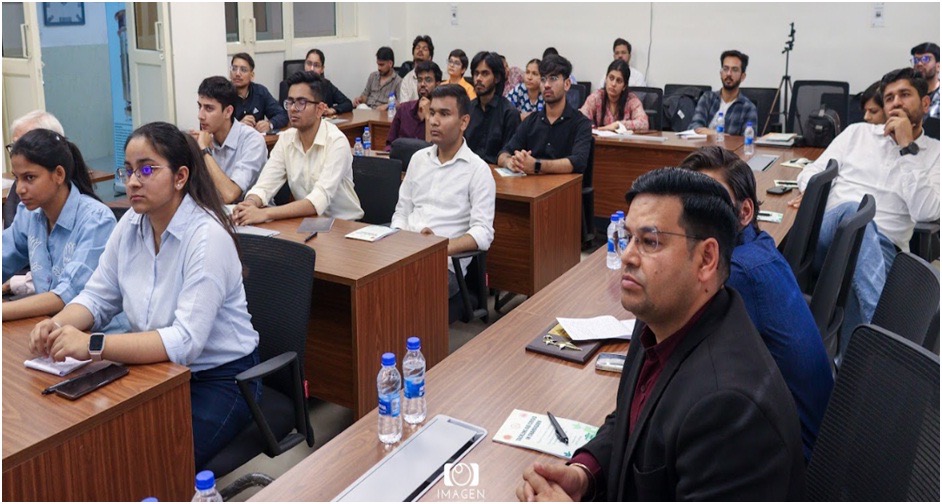
The high-level brainstorming session, “Tackling the AQI Crisis in Chandigarh,” was hosted by Panjab University (PU) at the PI-RAHI Conference Hall. Organized under the Lead Knowledge Institution Chandigarh Environment Project, the initiative is a joint collaboration between PU and the Chandigarh Institute for Transformation, with support from NITI Aayog.
AI and Tech-Driven Solutions
The project, led by Prof. Prashant Jindal and AI expert Prof. Mamta Juneja, focuses on deploying Artificial Intelligence for real-time monitoring and forecasting. Experts discussed indigenous air purification technologies and source apportionment to identify specific pollution triggers in the urban landscape.
The project, led by Prof. Prashant Jindal and AI expert Prof. Mamta Juneja, focuses on deploying Artificial Intelligence for real-time monitoring and forecasting. Experts discussed indigenous air purification technologies and source apportionment to identify specific pollution triggers in the urban landscape.
Policy Meets Individual Action
Chief Guest Smt. Anuradha Sharma Chagti, Special Secretary (Finance), UT Chandigarh, emphasized that while policy is vital, “behavioural change” is the ultimate solution. She urged citizens to adopt responsible waste handling and reduce energy consumption to support government efforts.
Chief Guest Smt. Anuradha Sharma Chagti, Special Secretary (Finance), UT Chandigarh, emphasized that while policy is vital, “behavioural change” is the ultimate solution. She urged citizens to adopt responsible waste handling and reduce energy consumption to support government efforts.











 Loading ...