

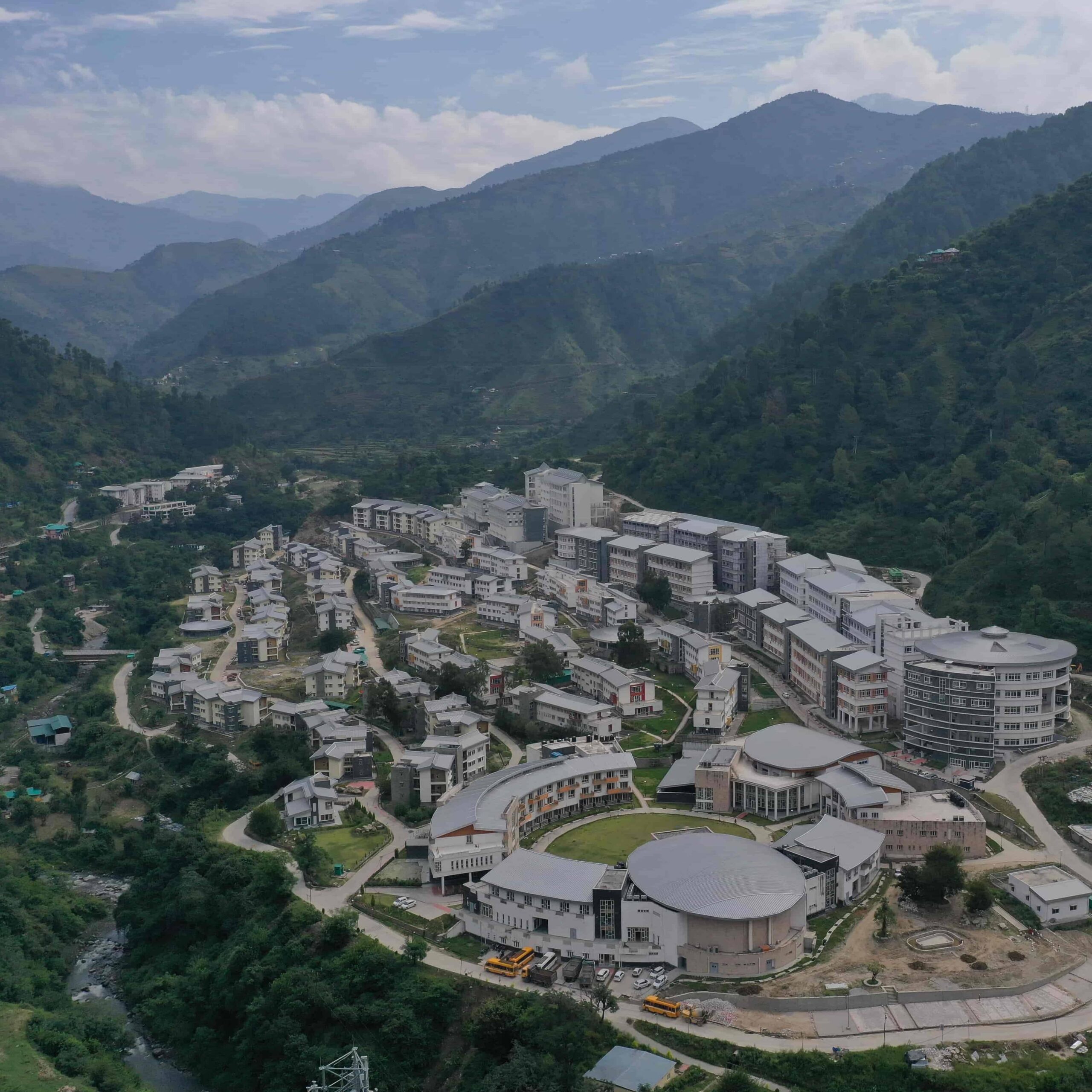
Indian Institute of Technology Mandi, in collaboration with its Technology Innovation Hub, is set to host HIVE 3.0, an international conclave focused on advancing industry–academia collaboration in the rapidly evolving field of Multimodal Artificial Intelligence (AI).

Scheduled to be held from March 30 to April 1, 2026, at the IIT Mandi campus, the three-day event will center on the theme of Human-Centered AI and Collaborative Intelligence. The conclave is expected to draw over 500 participants, including more than 100 startups, 100+ exhibits, and 50+ speakers from across the globe.
Highlighting the significance of the event, Somjit Amrit, CEO of the Technology Innovation Hub at IIT Mandi, said that HIVE 3.0 marks a significant step in the evolution of AI systems—from traditional, single-mode processing to more advanced multimodal capabilities. He noted that while conventional AI models have typically operated in isolation—handling text, speech, or visual data separately—the real world presents information as an integrated stream of multiple signals.
“HIVE 3.0 will showcase how AI is moving beyond text-based systems to process a combination of inputs such as speech, vision, gestures, and sensor data. This shift is critical for developing intelligent systems capable of addressing real-world challenges more effectively,” he said.
The conclave will be inaugurated by Padma Bhushan awardee Kris Gopalakrishnan as the Chief Guest.
Reflecting its global stature, the event will feature participation from leading industry players including Amazon, Dolby, Bosch, Microsoft, Hitachi, HP, Honeywell, and Collins Aerospace. Renowned academic institutions such as Stanford University, University of Regensburg, University of Genoa, CNRS, the IITs, and Indian Institute of Science Bengaluru will also contribute to the discussions.
Globally, Multimodal AI is emerging as the next frontier in artificial intelligence, as it mirrors how humans naturally process information—through a combination of visual, auditory, and contextual cues. With applications spanning healthcare, manufacturing, mobility, and education, the technology holds the potential to transform decision-making and operational efficiency across sectors.
Amrit further emphasized that ongoing investments in multimodal AI research at IIT Mandi’s TIH are paving the way for the development of fluid, human-like robotic systems. “These advancements could redefine the relationship between humans and machines,” he said.
HIVE 3.0 will also address critical themes such as responsible AI, particularly in the context of multimodal systems, and aims to serve as a key platform for shaping the future of human-centered artificial intelligence through deeper collaboration between academia and industry.